


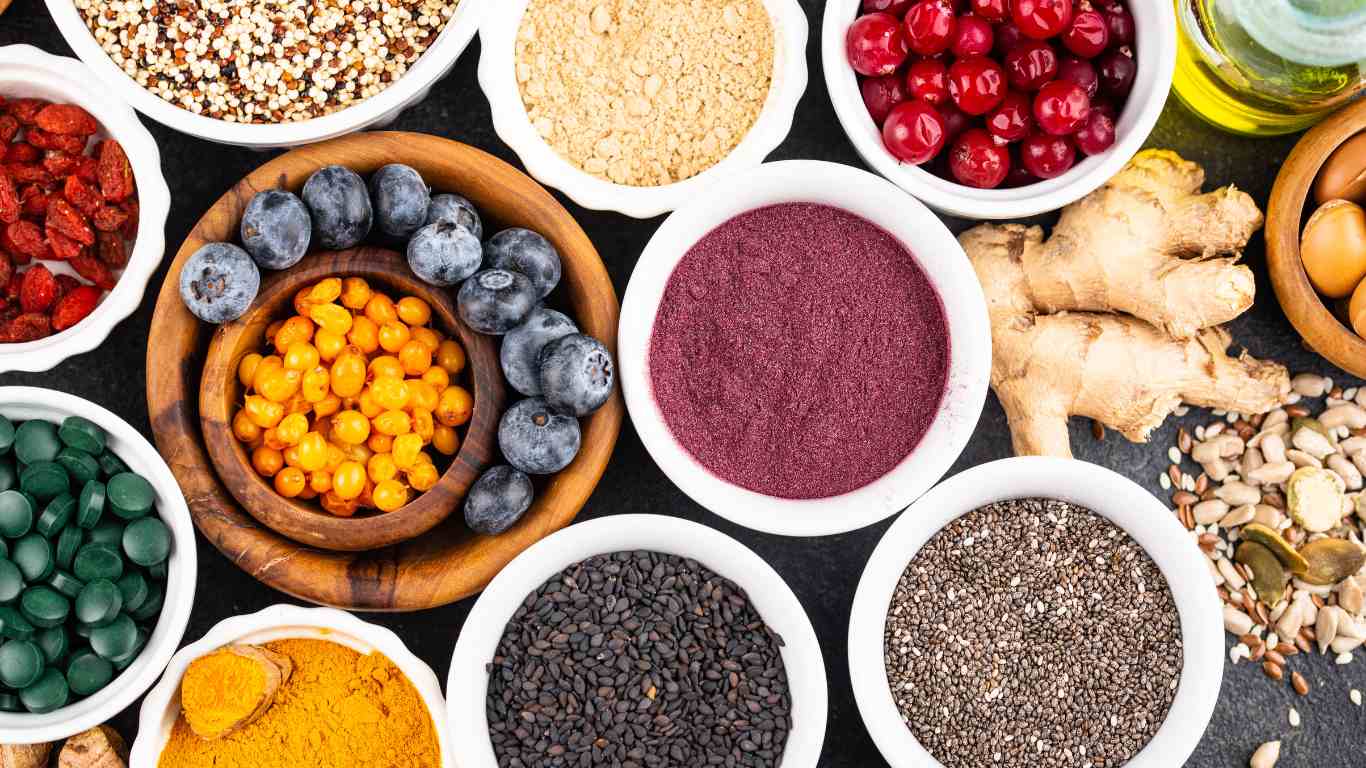
Superfoods are more than just a temporary dietary trend. Products such as chia, açai, matcha, curcuma, avocados, and quinoa have gained global recognition as integral components of a modern diet. There is an increasing demand from consumers for healthy, functional, and natural foods designed to positively impact well-being and overall health. The global market for plant-based food is expanding at a consistent rate. This is why superfoods are now used in:
- Beverages (smoothies, juices)
- Dietary supplements
- Snacks and protein products
- Baked goods
- Ready-to-eat meals
Why Is Superfood So Popular?
According to the Federal Institute for Risk Assessment (BfR), approximately 48% of survey respondents consider superfoods as integral components of a health-conscious diet. At the same time, the BfR and the Federal Office of Consumer Protection and Food Safety (BVL) point out that the term “superfood” is not clearly defined—either scientifically or legally.
Superfoods are characterized by a particularly high content of health-promoting nutrients, including:
- Vitamins
- Minerals
- Antioxidants
- Proteins
- Fiber
- Healthy fats
These nutrients are believed to have a positive effect on health, well-being, and disease prevention.
Typically, superfoods are:
- Plant-based
- Unprocessed or minimally processed
- Functionally beneficial (e.g., anti-inflammatory, immune-boosting, or digestive properties)
Many superfoods have a long history in natural medicine, such as Ayurvedic medicine and Traditional Chinese Medicine, or have served as staple foods in indigenous cultures.
While superfoods became popular in the 1990s and early 2000s, their origins extend much further back. For example:
- Curcuma has been used in Ayurvedic medicine for millennia as a remedy for inflammation.
- Quinoa served as a staple food for the Incas and was revered as the “mother grain.”
Particularly in Europe, the demand for innovative food products is steadily increasing.
Global Supply Chains Raise Food Safety Requirements
A significant proportion of the superfoods consumed in Germany are sourced from international growing regions in South America, Africa, and Asia, where they have been used as staple foods or medicinal plants for millennia. However, they are rarely locally sourced.
As the superfood market becomes increasingly globalized, greater requirements are being placed on:
- Quality
- Product authenticity
- Food safety
Consequently, safety and transparency are becoming increasingly important.
Challenges: Risks Associated with Superfoods
Variable climatic conditions, complex transportation routes, storage, and processing methods can affect quality and production reliability. Especially for products frequently consumed raw or after minimal processing, the risk of:
- Microbial contamination
- Cross-contamination
- Mislabeling
increases significantly.
How Real-Time PCR Analysis Enhances Superfood Safety
To ensure the highest standards of food safety and facilitate early identification of potential risks, CONGEN offers a broad portfolio of real-time PCR kits for food microbiology and food allergens. These enable:
- Rapid and reliable identification of relevant pathogens and contaminants.
- Efficient quality control throughout the entire production and supply chain.
Due to their high sensitivity and specificity, our real-time PCR kits provide precise results for food safety testing.
Detection of Microbial Contamination in Superfoods
To identify microbial contamination in food, CONGEN offers real-time PCR kits for the direct qualitative detection of health-risk microorganisms, such as:
- Salmonella
- Escherichia coli (E. coli)
- Listeria
The relevant real-time PCR kits for identifying these pathogens can be found and downloaded here: www.congen.de/en/food-analysis/food-microbiology/.
Detection of Cross-Contamination in Superfoods
To guarantee product safety and ensure compliance with the labeling requirements of EU Regulation 1169/2011, CONGEN has developed real-time PCR kits for the qualitative and/or quantitative detection of the 14 mandatory allergens. The most prevalent allergens in superfoods include:
- Gluten
- Peanuts
- Soya
These allergens are among the most common causes of cross-contamination in superfoods and are mandatory for labeling.
Our real-time PCR assays are compatible with commonly used real-time PCR instruments equipped for the detection of two fluorescence emissions (FAM and VIC/HEX) simultaneously.
Conclusion:
The popularity of superfoods brings both opportunities and challenges for food safety. With real-time PCR tests from CONGEN, manufacturers and laboratories can minimize risks and ensure the quality and safety of their products.
If you have any further questions about our detection systems, please do not hesitate to contact us.